

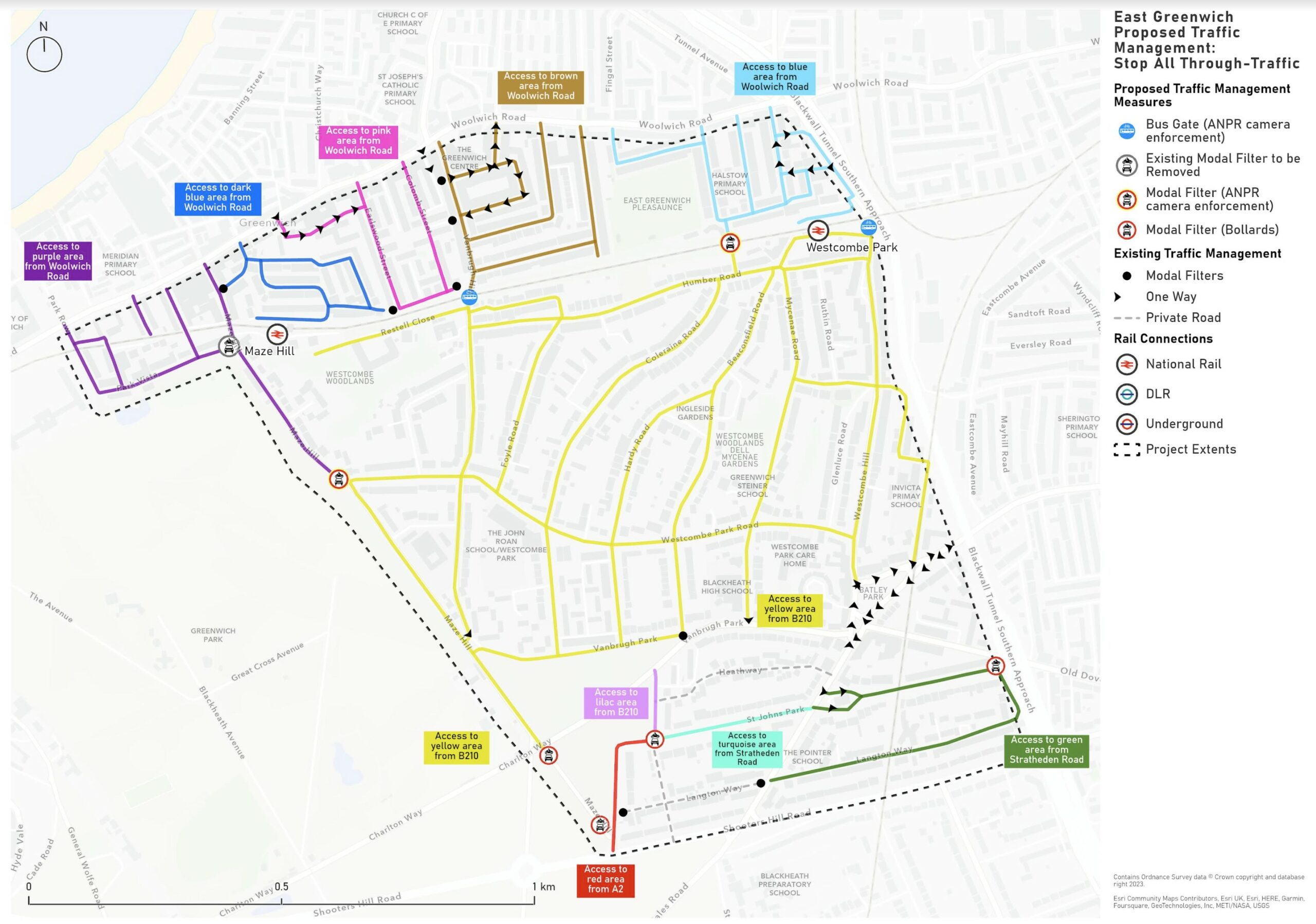
The Royal Borough of Greenwich have now made the East and West Greenwich LTN permanent without fully publishing the data from the recent consultation that closed on January 7. The Council have also refused requests from Councillors to scrutinise this data saying the request is unnecessary as there has already been another scrutiny meeting on the same topic and that the request is politically motivated.
The Westcombe Society Environment committee find it sad that an Authority that claims to work to tackle ‘poverty, hardship and inequality‘ (Royal Borough of Greenwich mission statement) should decide to make such an unequal scheme permanent especially since there are still many unanswered questions.
The Council claim that ‘after extensive trial and consultations’ the scheme has contributed to making the area ‘safer, cleaner and greener’ and that more people have been encouraged to walk or cycle thus improving air quality. The reality is that, although many of us living in the LTN now enjoy even quieter streets than previously, this is at the expense of those living on the boundary roads and in Charlton.
There is particular cause for concern in the emphasis put on ‘modest improvements in air quality at most locations’. The results do not in fact show a reduction in pollution as the air quality results are ‘judged to be not significant.‘ (Appendix B – Air Quality Report, October 2025). Councillors do not appear to understand that this term means that the data do not support one side or the other and that the small difference between them could be due to chance.
There is no excuse for this. The misinterpretation of air quality data has been raised repeatedly by residents’ groups, including the Westcombe Society, and by Councillors at the Scrutiny committee meeting in November 2026.
A similar problem arises from the misrepresentation of the traffic data. While roads within the scheme appear to have experienced a reduction in traffic those on the boundary and in Charlton are more congested than previously. In their evidence some residents describe how seriously they have been affected making them anxious to move away from the area. Assessing the impact of the scheme should not be just a matter of numbers but also of the severity of the changes. Mitigation has been promised but whether that will work is not proven.
There is also a suggestion that the decision to make the scheme permanent may not have been based purely on the data due to wording in the most recent Royal Borough of Greenwich report (February 2026). This says that ‘If the scheme is not progressed, there is a risk that funding bodies may reconsider future investment in Greenwich’s transport programmes. The Council has already invested resources in developing, implementing and monitoring the trial scheme; discontinuing it at this stage would result in a loss of that investment without delivering the intended long-term benefits’ and that ‘Choosing not to proceed with the TMO at this stage could damage public confidence in the Council’s decision-making and its commitment to delivering long-term improvements.’
In our view misinterpretation of data and lack of mitigation measures before making the scheme permanent also erode trust in our Councillors and the system.
Further information on the decision can be found on the commonplace update here.
The Council report and Appendix are here.
The Westcombe Society Environment Committee will continue to question the interpretation of the data and will publish their questions on this website soon.
Meanwile we encourage residents who have questions to write themselves by:
- email to traffic.management@royalgreenwich.gov.uk
- letter to Technical Support Team, FAO Programme Delivery Team, Transport, 3rd floor, The Woolwich Centre SE18 6HQ
We suggest you also share your comments with your Councillors
Leave A Comment